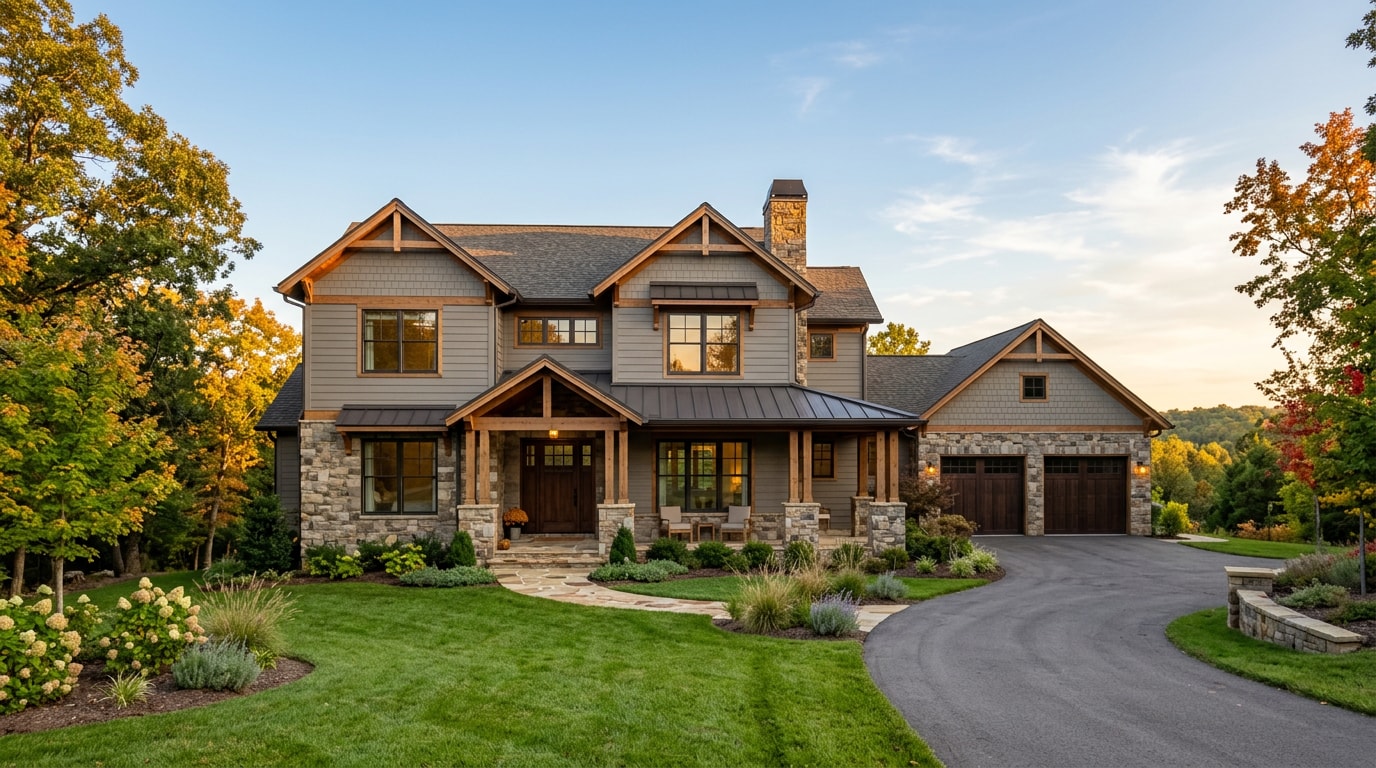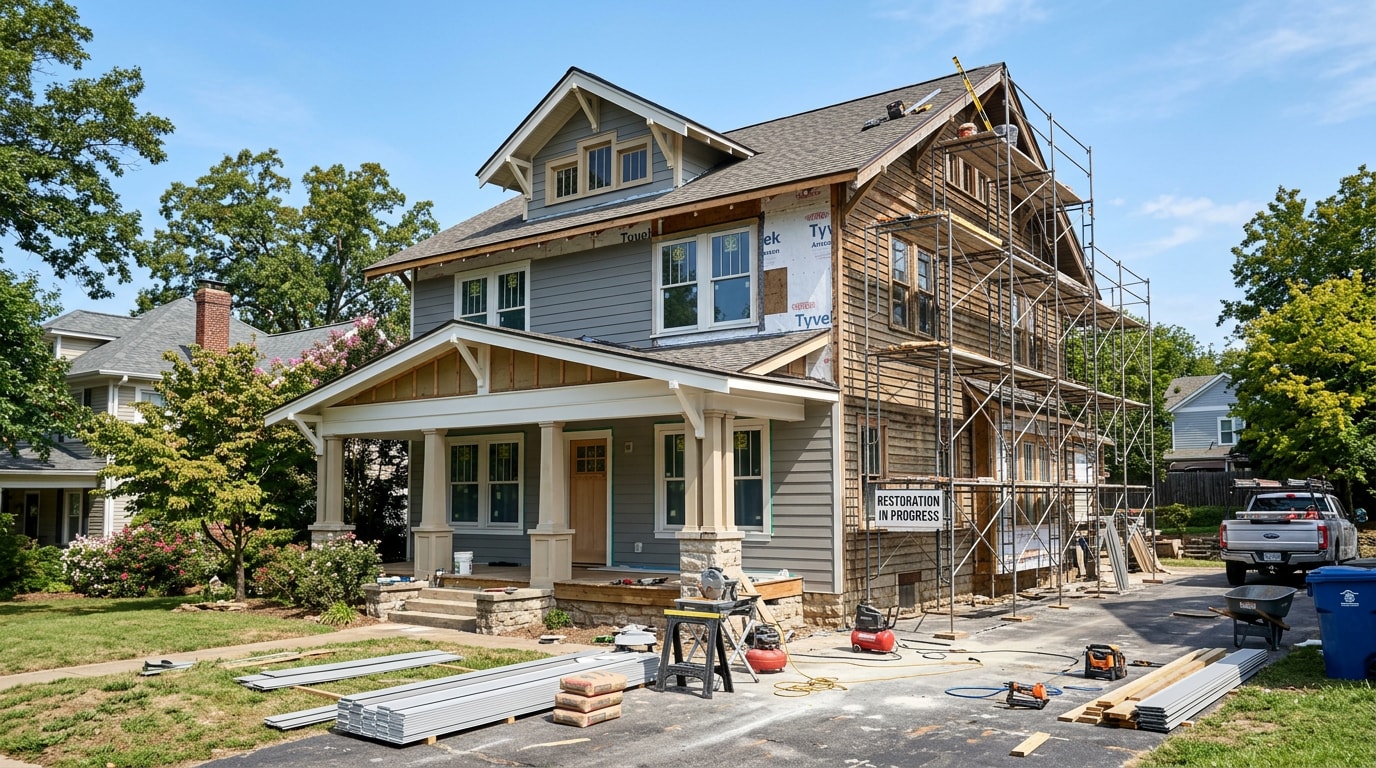
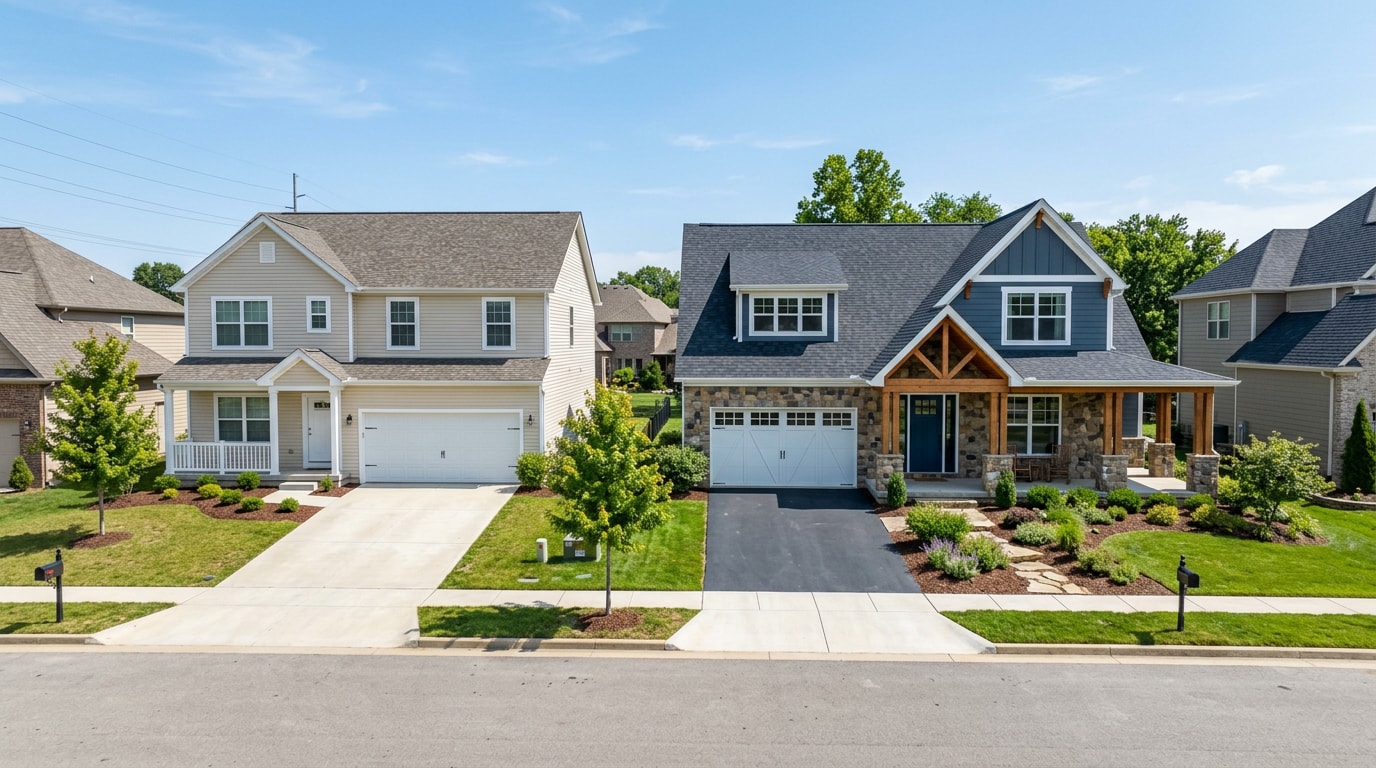
A spec home vs custom home decision in Lowell, AR really comes down to three trade-offs: speed, budget certainty, and control. Both paths end in a new house in Northwest Arkansas, but they get there in very different ways. Here's how the costs, timelines, and design options actually compare in 2026.
Spec Home vs. Custom Home: Quick Comparison
| Spec Home | Custom Home | |
|---|---|---|
| Who decides the design | Builder | You |
| Typical move-in timeline | 30–90 days if near-complete | 4–6 months, sometimes 12+ |
| Financing | Standard mortgage | Construction loan, then permanent mortgage |
| Lot | Builder-selected | Your land or your choice |
| Design changes | Little to none | Full control |
| Cost per sq. ft. | Lower, standardized | Higher, varies by finish |
Nationally, the gap between the two has been widening. The custom home premium, the difference between what typical buyers pay per square foot for a contractor-built home and a spec home, reached 12.6%, its highest level since 2011.
For custom single-family detached homes started in 2025, the median price climbed to $171 per square foot.
What Is a Spec Home?
A spec home, short for speculative home, is a house a builder constructs without a specific buyer lined up. The builder picks the floor plan, the fixtures, the paint colors, and the landscaping. The goal is a move-in-ready property that appeals to as many buyers as possible.
Spec homes make up a sizable share of new construction in growing Lowell subdivisions near I-49, where builders know demand holds steady. Because the builder absorbs the design risk upfront, these homes often move quickly once they hit the market.
Spec home pros:
- Faster path to move-in, often weeks instead of months
- Lower price per square foot than a comparable custom build
- Simpler financing with a standard mortgage
- Fewer decisions for the buyer to make
Spec home cons:
- Little to no input on floor plan or finishes
- Harder to add accessibility or lifestyle features after the fact
- Builder-selected lot, not your choice of land
In a typical Lowell subdivision spec package, that standardization might mean laminate countertops and a fixed three-bedroom layout. One buyer we worked with wanted to shift a wall to widen a home office, a simple request on paper, but it wasn't possible once framing and electrical were already locked in.
What Is a Custom Home?
A custom home flips the process around. You lead from day one: choosing the lot, working with a designer, and signing off on every material and finish before a wall goes up. This is the route for buyers who already know what they want.
Building custom also means you can build on your own lot, which matters in Benton County, where acreage and view lots are still available outside the denser subdivisions. Learn more about our custom home construction process if full design control is the priority.
Custom home pros:
- Total control over layout, lot, and every finish
- Built around specific needs, like multigenerational living or a home office
- Easier to include accessibility features from the start instead of retrofitting later
- Materials and construction methods chosen to your standards
Custom home cons:
- Higher cost per square foot than a spec home
- Longer timeline from first meeting to move-in
- More decisions required from you along the way
- Requires a construction loan, which has its own qualification process
One advantage that rarely comes up in spec-home conversations is Universal Design, features like wider doorways, zero-step entries, and accessible bathrooms built in from the start instead of retrofitted later. Universal design is the design of products and environments to be usable by all people, to the greatest extent possible, without the need for adaptation or specialized design. That matters most for buyers planning to age in place or accommodate a family member with mobility needs.
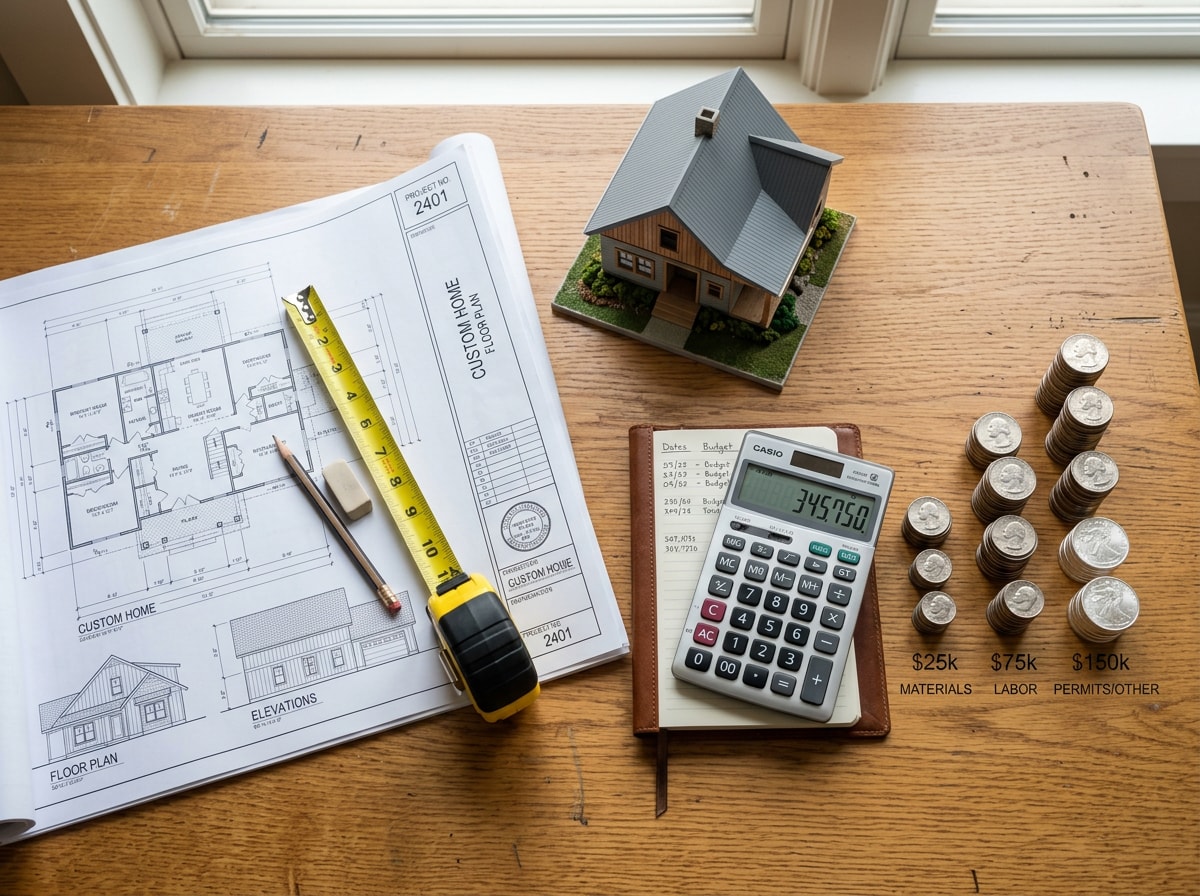
Costs: Why Spec Homes Run Cheaper per Square Foot
Spec homes are typically less expensive per square foot, largely because of how builders source materials. A builder buying fifty identical tubs, light fixtures, or cabinet sets at once can pass some of that savings on, something a single custom project can't match.
For custom single-family detached homes started in 2025, the median price increased to $171 per square foot, while for spec starts, excluding improved lot values, the median was $152 per square foot. That gap has been growing: median spec-home prices per square foot have effectively plateaued for four consecutive years, while median custom contract prices increased from $156 per square foot in 2021 to $171 per square foot in 2025, a nearly 10% gain.
These are national figures, not a Lowell-specific quote. Exact numbers here will shift with lot location, lumber and labor markets, and how far outside town you're building, so treat them as planning ranges and confirm current pricing with a local builder before setting a budget.
Timeline: How Long Each Path Actually Takes
Timeline is where spec homes stand out. A quick move-in spec home, one that's already built or nearly complete, can often close in 30 to 90 days. That's a dramatically shorter window than most custom builds, which is why spec homes attract buyers relocating to Lowell on a tight schedule.
Custom builds typically run four to six months from groundbreaking to move-in, though complex designs, permitting, or supply delays can stretch that to a year or more. Permitting requirements vary by jurisdiction, so confirm current timelines with the City of Lowell or Benton County before you lock in a move-in date, especially on a lot that needs new utility connections.
Resale is worth weighing too. Most buyers who choose to build custom are focused on building a home for themselves, not the next owner, so highly personalized finishes can narrow your buyer pool later. That matters if your timeline in Lowell is uncertain.
Which Home Is Right for You?
Both paths work. The right one depends on how you weigh timeline, budget certainty, and design control against each other.
A spec home trades flexibility for speed and price predictability. A custom home trades time and money for a finished product built entirely around how you live. For most buyers, timeline ends up being the deciding factor: if you can't wait months for a custom build, a spec home becomes the practical choice regardless of how you feel about the finishes.
See examples of completed builds in our project gallery, or browse our Lowell, AR service area to compare both options locally.
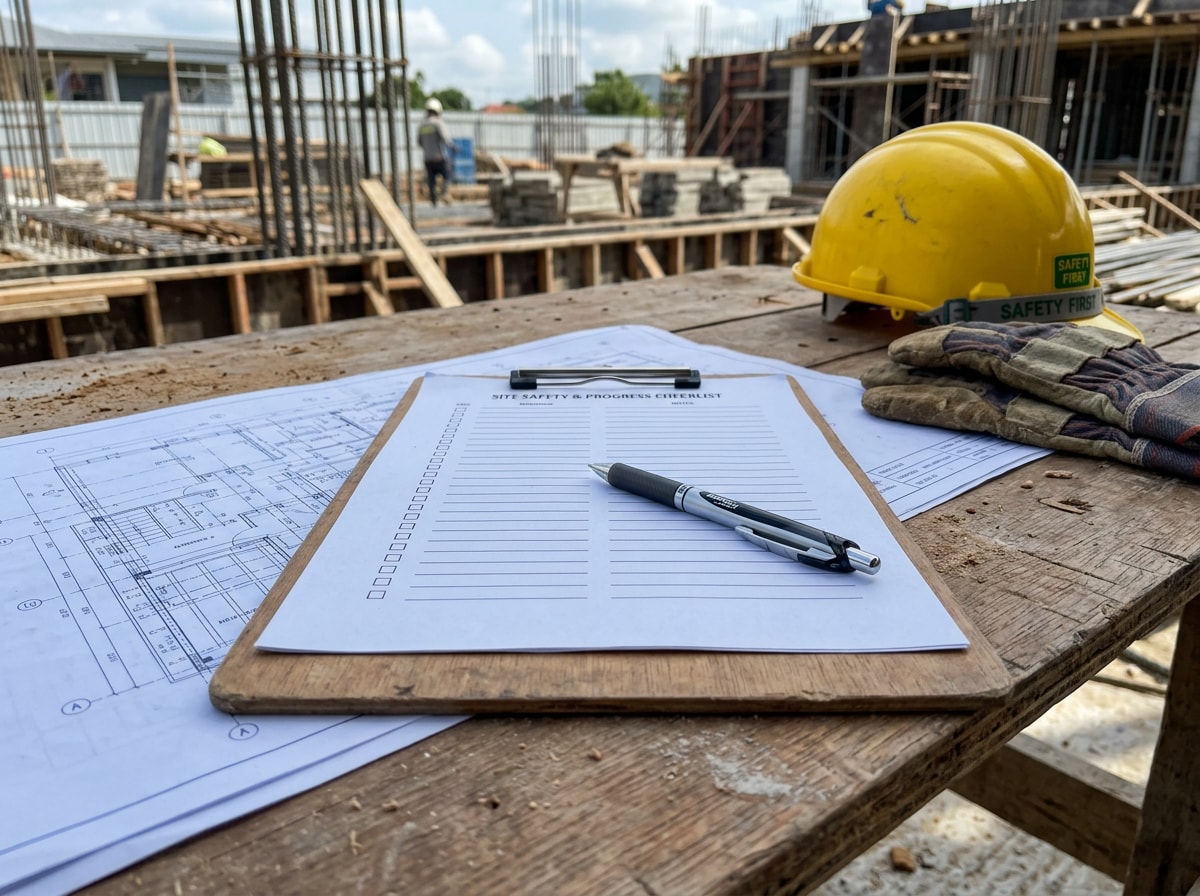
How to Decide: A Quick Checklist
Run through these five questions before committing to either path.
- Budget ceiling — Is your number firm, or do you have room for custom overages?
- Move-in date — Do you need keys within 90 days, or can you wait a year?
- Must-have features — Are there layout or accessibility needs you can't compromise on?
- Land status — Do you already own a lot, or need the builder to provide one?
- Risk tolerance — Can you absorb unexpected costs or delays if they come up?
If you already own land and want a plan built specifically for your family, our guide on building a custom home on your own land walks through what to expect before you break ground.
Ready to talk through your answers? The team at Covey Constructions offers a construction consultation to help you weigh both paths before you commit. Get a free estimate to start the conversation.
FAQ
What's the main difference between a spec home and a custom home?
A spec home is built by a builder without a buyer lined up, using a pre-set floor plan and finishes. A custom home is designed from scratch around one buyer's lot, layout, and material choices.
Is a spec home cheaper than a custom home?
Usually, yes, on a per-square-foot basis. The custom home premium reached its highest level since 2011, at 12.6%, the difference between what typical buyers pay per square foot for a contractor-built home versus a spec home. Your final price still depends on lot cost, finish level, and local labor and material pricing.
Can you customize a spec home after you buy it?
Only in a limited way, and usually only before certain construction stages are locked in, like framing and rough electrical. Once those are complete, structural changes typically aren't possible, though cosmetic updates after closing, like paint or light fixtures, are always an option.
What is the average cost per square foot to build a house in Arkansas?
Arkansas costs vary by region and finish level, but spec homes generally run lower per square foot than custom builds due to standardized materials and labor. Get a project-specific number from a local builder rather than relying on a national average, since regional labor and material costs shift year to year.
What upgrades should you skip on a new build?
Skip upgrades with low resale payoff, like high-end smart-home packages or ultra-premium fixtures, unless you're building custom specifically for your own long-term use. In either build type, structural and energy-efficiency upgrades usually matter more than cosmetic ones.
What's the most expensive part of building a house?
Land, site work, and foundation costs typically top the list, followed by framing and mechanical systems. A spec home bundles these costs into one price, while a custom home itemizes them separately in your budget, which is part of why custom pricing feels less predictable upfront.
---
Covey Constructions is a licensed general contractor serving Lowell and the greater Northwest Arkansas area, including Rogers, Bentonville, and Springdale. For project-specific cost and timeline numbers, contact our team.