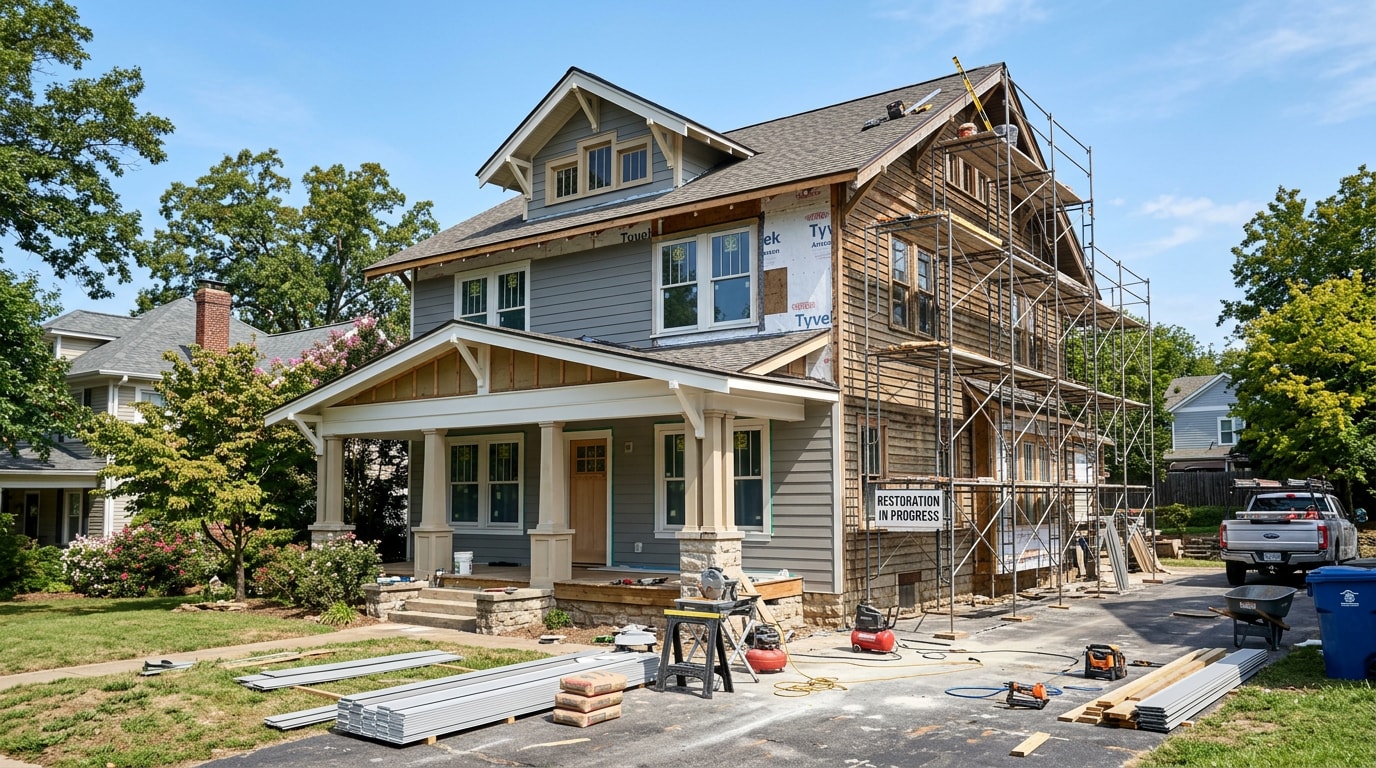
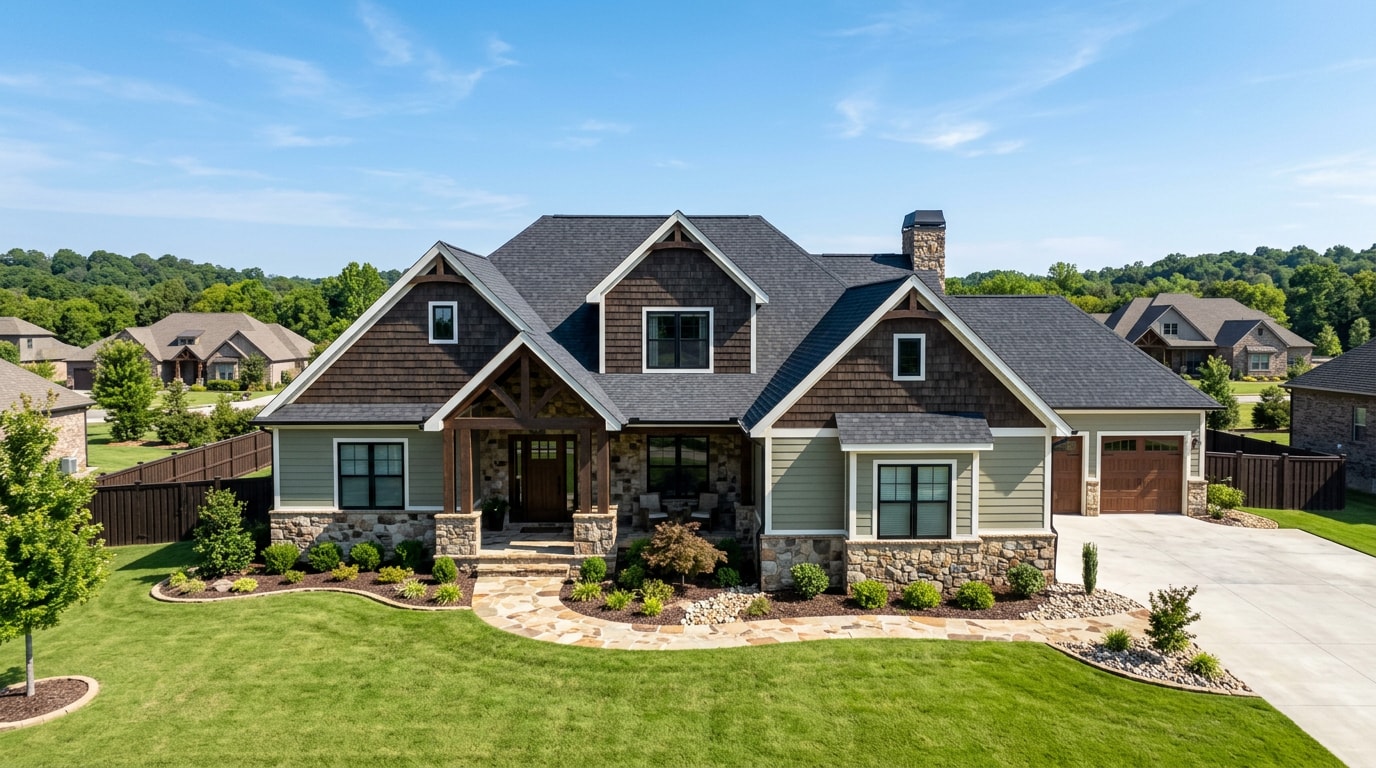
Construction management in Cave Springs, AR is what keeps a project's budget, schedule, and quality aligned from the first sketch to the final walkthrough. Whether you're planning a custom home, a room addition, or a commercial build-out, the gap between a smooth project and a stressful one usually comes down to who's coordinating the moving pieces. This guide breaks down what construction management actually covers, phase by phase, and when a Cave Springs property owner needs it instead of just a contractor.
What Is Construction Management?
Construction management is the professional practice of planning, coordinating, and overseeing a construction project from concept through closeout. A construction manager doesn't swing hammers. Instead, they keep every moving piece, budget, schedule, subcontractors, permits, pointed at the same finish line.
Most construction management work spans five connected phases: conception, pre-construction, procurement, construction, and post-construction. Within each phase, the construction manager handles scheduling, budgeting, coordination, quality control, safety oversight, and risk management, adjusting as issues surface.
For a Cave Springs property owner, that framework replaces guesswork with a repeatable process. Our general contractor services page outlines how we apply this approach to local builds, and a construction consultation is usually the fastest way to find out whether your project needs full construction management or a more straightforward GC arrangement.
The 5 Phases of Construction Management
One widely used framework comes from the Construction Management Association of America (CMAA), which defines the construction lifecycle in five stages: pre-design, design, procurement, construction and monitoring, and post-construction. Each stage builds on the last. Skipping steps tends to surface later as cost overruns or rework.
In projects we've managed around Northwest Arkansas, the costliest surprises almost always trace back to a skipped pre-design step, not a shortage of skilled trades.
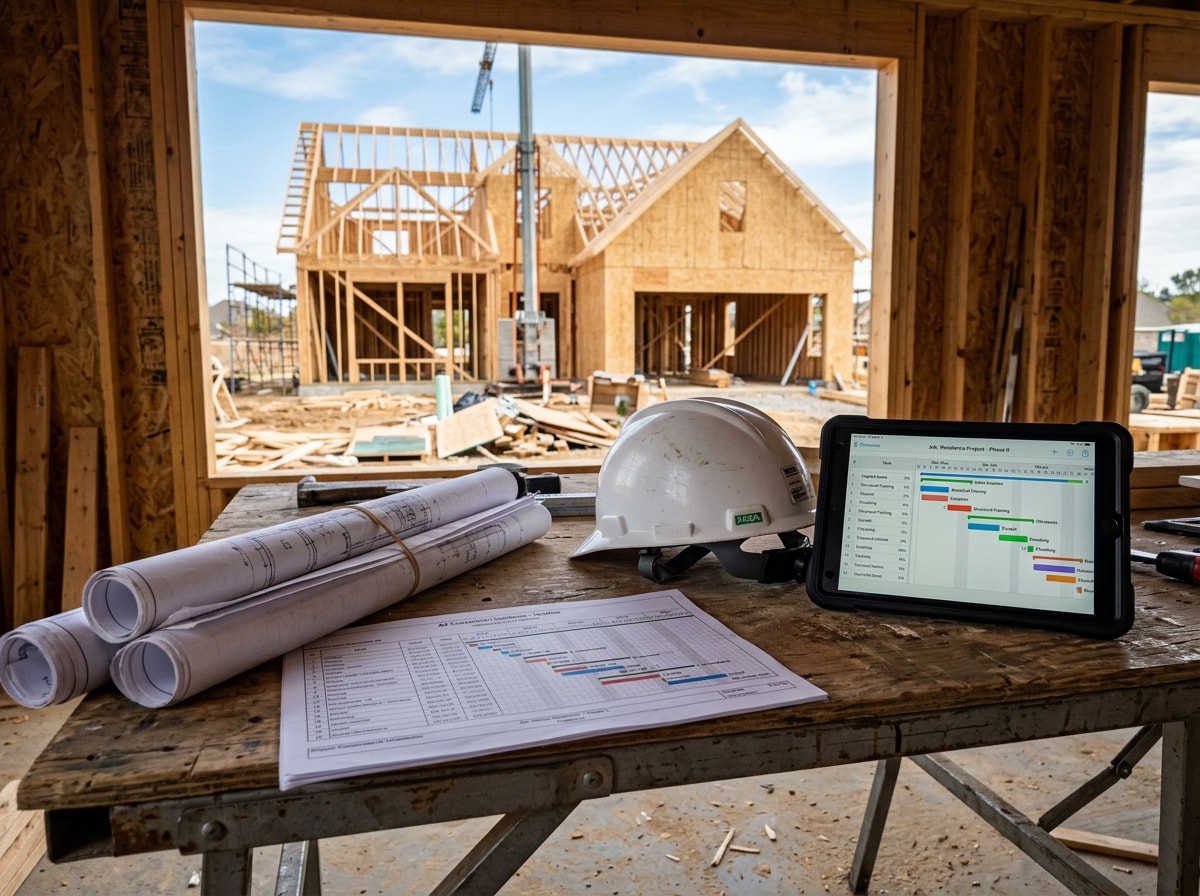
Phase 1: Pre-Design / Conception
Before any drawings exist, the team answers a basic question: is this feasible? Pre-design activities include:
- Conducting feasibility studies
- Defining scope and budget parameters
- Evaluating site conditions and zoning requirements
- Developing preliminary schedules
- Establishing the project team and its responsibilities
For a Cave Springs site, this often means checking local zoning rules, floodplain data, and utility access before committing to a design direction. The Cave Springs Building Department enforces state codes, supports contractors, and delivers efficient, trustworthy service to protect public safety and quality development, so coordinating with them early avoids surprises during permitting. Skipping this step is a common reason budgets drift later, when an owner commits to a layout the site can't actually support.
Phase 2: Design / Pre-Construction
Once feasibility is confirmed, design work moves from rough concepts toward buildable documents. This phase includes advancing drawings from schematic design to construction documents, coordinating structural and building systems, refining cost estimates, and submitting plans for permitting and code review.
This is also where a construction manager earns their fee, catching conflicts between architectural, structural, and mechanical drawings before they become expensive field problems. Permitting timelines vary by jurisdiction in Northwest Arkansas, so building in buffer time here helps avoid downstream schedule pressure.
Phase 3: Procurement
Procurement includes issuing bid packages, reviewing contractor proposals, executing contracts, prequalifying subcontractors, ordering long-lead materials, and coordinating delivery logistics. Done well, this phase locks in pricing and availability before construction starts rather than during it.
Material lead times have grown less predictable in recent years, and rural job sites around Cave Springs can feel that lag more than urban sites with several supplier options nearby. Ordering long-lead items early, windows, structural steel, specialty fixtures, keeps the schedule from stalling once crews mobilize.
Phase 4: Construction and Monitoring
During construction, the construction manager focuses on coordinating subcontractors, monitoring progress against the schedule, managing costs and change orders, enforcing quality standards, and overseeing safety compliance. This phase demands constant communication between the field and the office.
A framing crew running behind schedule, for example, affects the electrician, the drywall team, and the final inspection date. The construction manager's job is spotting that ripple effect before it compounds. You can see how that plays out on real builds on our projects page.
Phase 5: Post-Construction / Closeout
Post-construction activities typically include completing punch list items, conducting final inspections, testing and commissioning systems, delivering record drawings and documentation, and finalizing payments. None of these steps should be rushed, even when an owner is eager to move in.
A thorough punch list process protects the owner from discovering defects months later, after warranties have started their clock. Proper documentation handover, as-built drawings, equipment manuals, warranty paperwork, also makes future maintenance and renovations easier to manage.
Key Roles: Who Does What
A construction manager oversees the entire project lifecycle, acting as the central coordinator between the owner, designers, subcontractors, and suppliers. That coordination is what separates construction management from simply hiring a contractor and hoping everyone communicates well on their own.
Other roles shape the project alongside the construction manager:
- Owner sets the vision and budget ceiling.
- Architect translates that vision into drawings and ensures code compliance.
- General contractor manages day-to-day labor and trade coordination when one is involved separately from the CM.
- Construction manager ties cost, schedule, quality, safety, and scope together across every phase.
According to OSHA's overview of the construction management industry, construction managers apply comprehensive project controls to help manage the critical issues of time, cost, scope, quality, and safety, and they can help improve worker safety by integrating safety and health into all aspects of the construction process, from the design phase to jobsite management.
Consider a mid-size retail build-out in Cave Springs. The owner wants a 6,000-square-foot space ready before a lease deadline. The architect produces drawings; the construction manager sequences the electrical rough-in, HVAC installation, and tenant finish work so subcontractors aren't tripping over each other; and the owner gets weekly updates instead of guessing at progress. That coordination is often the difference between hitting a lease date and missing it by months.
If you're building a custom home instead of a commercial space, the same coordination applies, our custom home construction and residential construction pages cover how we handle that locally.
Construction Management vs. Project Management vs. Program Management
These three terms sound similar but answer different questions for a reader comparing options. Focus differs by scope, construction phase only, full project lifecycle, or multiple related projects, with involvement timing varying by role.
| Role | Typical Scope | Involvement Timing |
|---|---|---|
| Construction Manager | Construction phase: budget, schedule, field oversight | Pre-construction through closeout |
| Project Manager | Full project lifecycle: design through construction | Concept through closeout |
| Program Manager | Multiple related projects or a portfolio | Ongoing, across projects |
For a single Cave Springs commercial build or custom home, most owners need a construction manager or project manager. Program management tends to matter more for developers running several projects at once.
Core Components of Construction Management
Six functional areas show up on nearly every construction management project, regardless of size:
- Cost control: estimating, budgeting, tracking costs, reviewing bids, and managing change orders as they arise.
- Scheduling: setting timelines and milestones, then using tools like Gantt charts to monitor the critical path.
- Quality assurance: verifying that completed work meets design specifications, building codes, and contract terms, not just that it looks finished.
- Site safety oversight: enforcing safety protocols, maintaining compliance, running daily toolbox talks, and conducting regular audits.
- Risk management: spotting potential issues, a delayed shipment, a subcontractor falling behind, a permit holdup, before they become expensive problems.
- Project communication: keeping the owner, design team, and trades informed through meetings, reports, and real-time updates.
Weak execution in any one of these areas tends to show up in the others. A scheduling slip often triggers a cost overrun; a communication gap often triggers a quality issue.
What Does a Construction Manager Cost?
Construction management services typically contract with the owner for a fixed fee rather than the lump sum a general contractor charges. The construction manager draws up plans and procures resources in a collaborative, open-book fashion, giving the owner more visibility into costs throughout the project.
Exact rates vary by project size, complexity, and region, so an accurate number for your Cave Springs project usually requires a conversation rather than a published rate card. Get a free estimate and we'll walk through what construction management would look like, and cost, for your specific build.
Benefits and Challenges in the Cave Springs Market
Construction management delivers real advantages, but it isn't friction-free, especially in smaller regional markets.
Common challenges:
- Labor shortages
- Cost overruns
- Miscommunication between trades
- Slower technology adoption among smaller regional firms
Common benefits:
- Improved scheduling efficiency
- Better collaboration between owner, designer, and trades
- Stronger safety performance
- Reduced rework
Northwest Arkansas markets like Cave Springs feel some of these challenges differently than larger metros. The regional labor pool is smaller, so a shortage of qualified electricians or concrete crews can delay a project longer here than in a city with dozens of competing firms to pull from. Material lead times also tend to stretch further for rural or semi-rural job sites, since suppliers often prioritize larger urban orders first.
On the benefit side, a construction manager's scheduling discipline matters more, not less, in a tighter labor market, sequencing trades efficiently keeps a smaller crew pool productive instead of idle. We cover projects throughout Cave Springs, Bentonville, Rogers, Springdale, and Fayetteville, and the regional constraints look similar across all of them.
If you're weighing a traditional build against an alternative structure, our breakdown of barndominium builders near me with prices in Tontitown, AR covers how costs and timelines compare for that build type.
How Technology Is Changing Construction Management
Technology has changed modern construction management substantially. Cloud-based scheduling tools let a construction manager update a timeline from a job site and have every subcontractor see the change instantly. Digital punch lists replace clipboard walkthroughs, and photo documentation creates a running record that protects both owner and builder if a dispute arises.
Recent research on digitalization in construction found the strongest consensus among industry professionals was around improved communication and collaboration between stakeholders, followed by reduced errors and waste and improved construction quality control. That lines up with what smaller firms notice first: the biggest return on new software isn't flashy modeling, it's fewer dropped handoffs between trades.
Adoption still varies by firm size. Smaller regional builders sometimes adopt new tools more slowly than large national firms, which is one reason choosing a construction manager who's already invested in scheduling and documentation software matters for a Cave Springs project.
Construction Management: The Key to Better Projects
Structured oversight and proactive risk management separate a smooth construction project from a stressful one. By providing both, construction management minimizes delays and cost overruns while improving overall project predictability.
For a Cave Springs property owner, that predictability means fewer surprises: a budget that holds, a schedule that's realistic from the start, and a finished building that matches what was promised. Whether the project is a retail space, a room addition, or a custom home, the same principle applies: plan thoroughly, coordinate constantly, and catch problems early.
Ready to talk through your project? Visit our homepage to see our full range of services, or get a free estimate and we'll walk you through what construction management could look like for your build.
FAQ
What is the difference between construction management and general contracting?
Construction management services typically contract with the owner for a fixed fee rather than the lump sum a general contractor charges. The construction manager draws up plans and procures resources in a collaborative, open-book fashion, giving the owner more visibility into costs throughout the project.
How much does a construction manager cost?
Construction managers typically charge a fixed fee or a percentage of overall project cost, rather than the lump-sum bid a general contractor provides. Exact rates vary by project size, complexity, and region, so an accurate estimate usually requires discussing your specific project.
Do I need a construction manager for my project?
Larger or more complex projects, commercial builds, multi-phase renovations, projects with tight deadlines, tend to benefit most from dedicated construction management. A small, single-trade job, like a roof replacement, usually doesn't need the same level of oversight.
What qualifications does a construction manager need?
Most construction managers have a background in construction, engineering, or a related field, combined with hands-on field experience. Familiarity with budgeting and scheduling software, plus formal safety training, rounds out the qualifications owners should look for.
Do I need a permit for construction in Cave Springs, AR?
Most new builds, additions, and major renovations in Cave Springs require a permit. The Cave Springs Building Department enforces state codes, supports contractors, and delivers efficient, trustworthy service to protect public safety and quality development, so checking with them, or having your construction manager check, before work starts is the safest approach.
What's the difference between a construction manager and a project manager?
A construction manager typically focuses on the construction phase itself, budgets, schedules, and field coordination once a project breaks ground. A project manager often gets involved earlier, overseeing the full lifecycle from planning through closeout.