Concrete cutting contractors in Bentonville, AR need more than a diamond blade and a truck. They need to read clay soil, plan around freeze-thaw swings, and know which city permits apply before the first cut goes in. This guide breaks down the methods, the process, and the local conditions that separate a clean cut from a costly redo.
Concrete Cutting Services We Provide in Bentonville, AR
Cutting, coring, and sawing aren't separate specialties. They're the groundwork that makes clean repairs, additions, and new pours possible. These techniques support most of the concrete work we handle through our residential construction services across Bentonville.
| Method | Best For | Typical Equipment |
|---|---|---|
| Flat/slab sawing | Driveways, sidewalks, expansion joints | Walk-behind or handheld saw |
| Wall sawing | Window, door, and wall openings | Track-mounted wall saw |
| Wire sawing | Thick, reinforced, or oversized sections | Diamond wire system |
| Core drilling | Round penetrations for pipe or conduit | Handheld or rig-mounted drill |
Flat and Slab Sawing
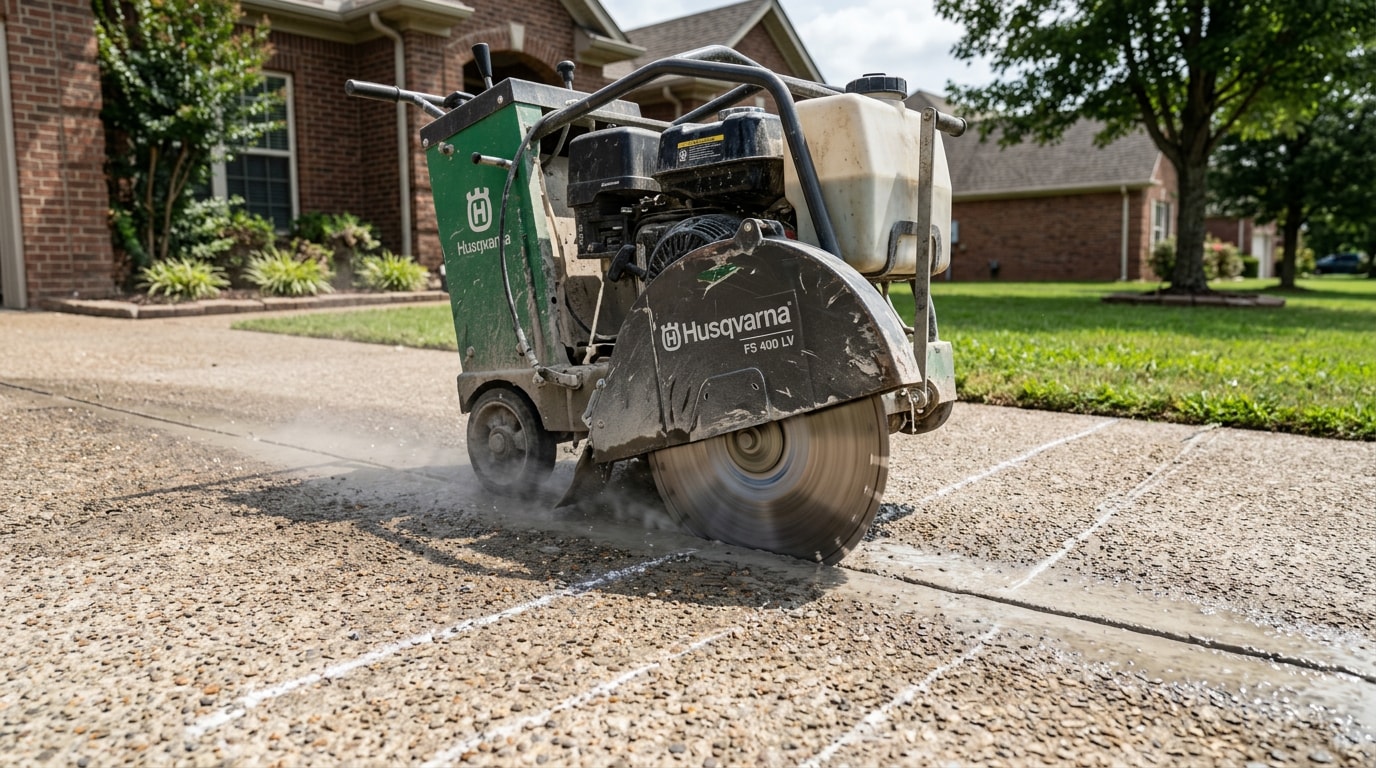
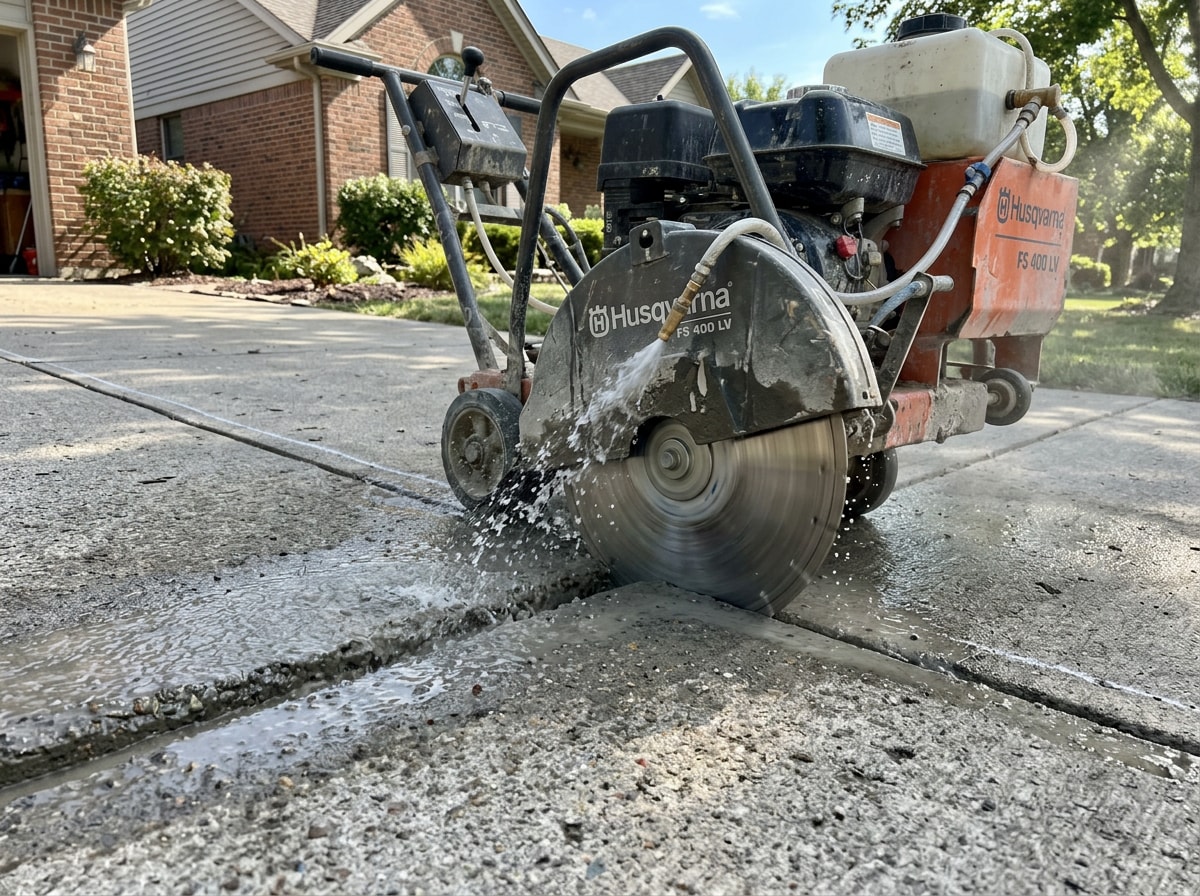
Slab sawing is the controlled removal or separation of hardened concrete using diamond-blade saws, chosen based on slab thickness and site access. In Bentonville, it's commonly used for slab removal, expansion joint cuts, and precise utility cuts for plumbing or electrical lines. A handheld saw works for shallow driveway joints, while thicker commercial slabs often call for a track-mounted saw to keep cuts straight and consistent.
Wall Sawing and Wire Sawing
Wall saws handle vertical cuts for window openings, doorways, and wall penetrations without the vibration and debris of jackhammering. Wire saws step in when a cut is too thick or too heavily reinforced for a standard blade, or when the opening needs to be larger than a track saw can reach. Both methods leave a controlled edge that's easier to finish and tie into new work.
Core Drilling for Utility Penetrations
Core drilling is a focused form of concrete coring used for round penetrations, plumbing stacks, electrical conduit, and HVAC lines, where a clean hole matters more than a wide cut.
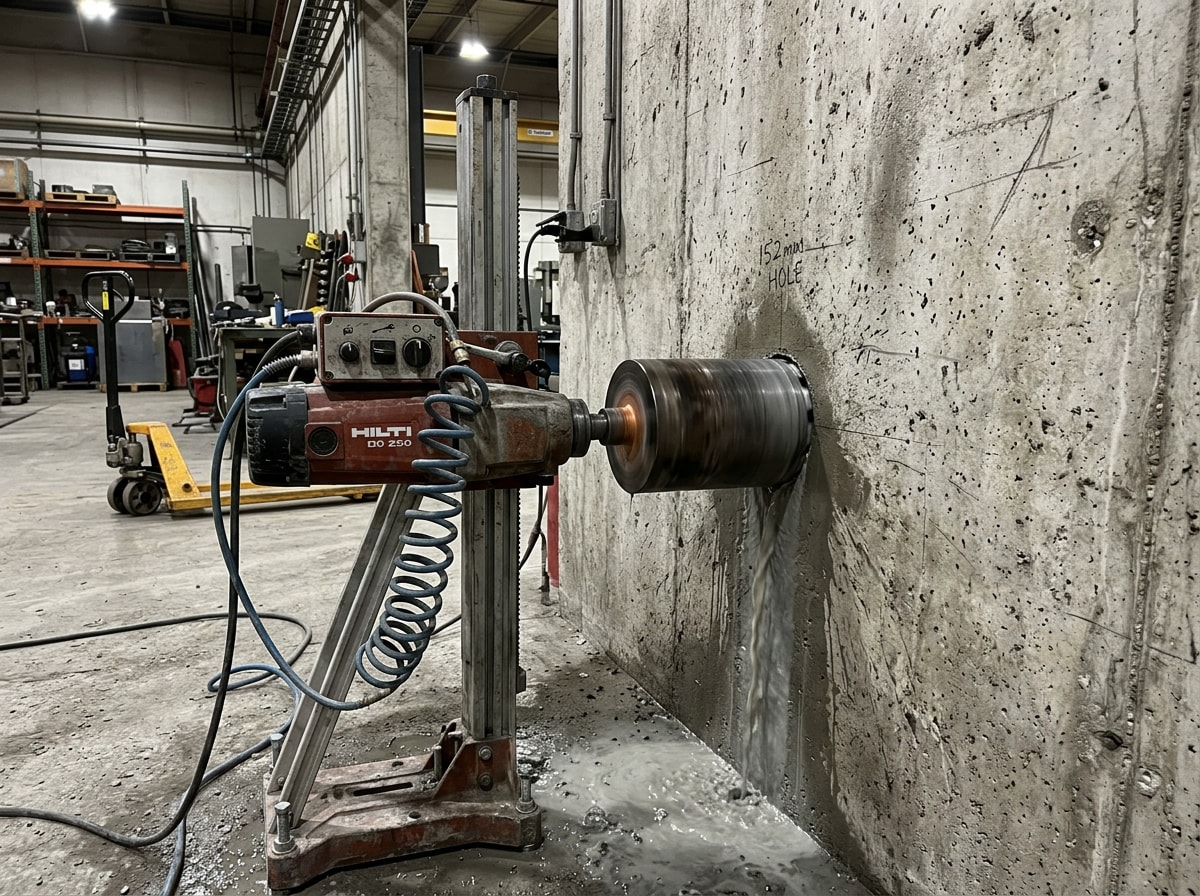
Core drilling creates a round hole through concrete or masonry with far less vibration, dust, and structural disruption than jackhammering. It leaves a clean edge, doesn't stress surrounding concrete, and can be done indoors with minimal mess. Bit sizes typically range from under an inch to well over a foot in diameter, chosen based on the pipe, conduit, or anchor the hole needs to accommodate. Getting the bit size right the first time avoids a second, more invasive cut.
Core drilling and sawing classifications generally follow standards set by the Concrete Sawing & Drilling Association, which promotes the use of professional cutting, polishing, imaging and selective demolition contractors and their methods . Vertical drilling handles floor and footing penetrations, horizontal drilling handles wall penetrations, and handheld versus rig-mounted setups come down to access and slab thickness.
Where Cutting Fits Into Common Bentonville Projects
Most concrete projects in Bentonville involve cutting at some point, whether that's demolition, a tie-in, or a planned control joint. Here's where it shows up most often:
- Driveways – Removing a failing section, cutting clean expansion joints, or tying a new pour into an existing driveway all rely on accurate saw work. Clean cuts prevent the cracking that sloppy demolition often causes.
- Patios – Cutting creates control joints that manage shrinkage cracking, and it allows partial demolition when a patio needs to expand or tie into a new slab without tearing out the whole area. See our patio extension options if you're planning to grow an existing space.
- Sidewalks – Sections often need cutting for trip-hazard repair, especially where roots or settling have lifted a panel. Clean cuts also help maintain proper edges for ADA-compliant slopes.
- Retaining walls – Bentonville's hillside lots frequently call for a retaining wall to manage grade changes. Cutting and coring come into play for drainage pipe penetrations and anchoring hardware.
- Footings – Additions and utility trenching sometimes require saw-cutting existing footings to tie new structural elements into what's already there. Precise cuts protect the surrounding concrete's integrity, which matters most when a project adds load, like a home addition.
Why Bentonville's Soil, Terrain, and Climate Change the Plan
Bentonville sits on a mix of clay-heavy soils and rolling terrain that shifts in elevation across the city. Clay soil expands when wet and contracts when dry, which can shift slabs and footings over time if cutting and joint placement aren't planned with that movement in mind. We've seen Bentonville driveways where a single wet season was enough to crack a slab that had expansion joints spaced too far apart, which is a problem that's cheap to prevent and expensive to fix after the fact.
Elevation changes across the city also mean drainage and grading play a bigger role in where retaining walls and footings go. Northwest Arkansas winters bring freeze-thaw cycles, and the timing of those cycles affects when cutting and pouring should happen. A contractor familiar with Bentonville's soil and seasonal patterns can plan joint spacing and project timing to reduce the odds of cracking later.
It's also worth knowing that any contractor building, repairing, or improving a home for more than $2,000 is required to be bonded and licensed by the Arkansas Contractors Licensing Board . Asking for proof of that license before signing a contract is a reasonable step for any project above that threshold.
Bentonville has grown quickly over the past decade, bringing new construction, renovations, and infrastructure work across the city. The terrain ranges from flatter areas near downtown to steeper, wooded lots on the outskirts, which is part of why Northwest Arkansas properties often need concrete work tailored to the specific lot rather than a one-size-fits-all approach.
Our Concrete Cutting Process in Bentonville, AR
The process generally follows four steps, from your first message to project close-out.
- Call or message us. Have the project type, site access details, and your rough timeline ready. That lets us give a more accurate initial estimate before scheduling a visit. You can request a free estimate to get that conversation started.
- Site visit and written estimate. A visit lets us assess slab thickness, access points, and any utility lines before cutting begins. If the scope is still taking shape, a construction consultation can help pin down the plan first. The written estimate that follows covers scope, equipment, timeline, and total cost.
- Permits, base prep, and pour. Not every cutting job needs a permit, but work tied to structural changes, utility trenching, retaining walls, or new footings often does. The
Bentonville Building & Fire Safety Division issues building, electrical, mechanical, plumbing, demolition, and fence permits , and retaining wall permits are applied for separately through the city's online portal . Base prep follows any demolition, setting up proper compaction before a new pour.
- Cure, inspect, and close out. After the pour, concrete needs time to cure before any load is placed on it. We handle cleanup, walk through a final inspection, and confirm the finished work meets the original scope.
Dust, Noise, and Safety on a Cutting Job
Cutting and drilling concrete generates fine dust that most homeowners never think about until it's covering the garage. Crystalline silica is a common mineral found in construction materials such as sand, stone, concrete, brick, and mortar , and cutting or grinding it without controls creates airborne dust that's a real health hazard for anyone working near it. OSHA requires that no employee be exposed to airborne concentrations of respirable crystalline silica above 50 micrograms per cubic meter, averaged over an 8-hour shift . In practice, that means wet cutting or a vacuum dust collection system on most saw and drill work, not a dry blade kicking up a cloud.
For a homeowner, the practical takeaways are simple: ask whether the crew uses wet cutting or dust collection, expect some water runoff to manage on the day of the cut, and know that a properly controlled job leaves far less mess than an uncontrolled one. Noise is unavoidable during active cutting, but well-maintained equipment and shorter, more precise cuts reduce how long that noise lasts on site.
Service Areas Near Bentonville, AR
Beyond Bentonville, we also serve nearby Northwest Arkansas communities including Rogers, Springdale, Fayetteville, Bella Vista, Cave Springs, Tontitown, and Lowell. Soil and terrain conditions shift slightly across the region, but the same cutting and coring principles apply. If your project also involves structural tie-ins, our guide to structural steel contractors in Bentonville covers how cutting and structural work often overlap on larger builds.
Ready to scope your project? Get a free estimate and we'll walk the site before anything gets cut. You can also browse our homepage for the full range of services we offer across Northwest Arkansas.
FAQ
Do I need a permit to pour a concrete slab in Bentonville, AR?
Many residential slab projects require a permit, particularly if the slab affects drainage, structural elements, or property setbacks. Retaining walls and grading work typically need separate permits from the city. Checking with Building & Fire Safety before pouring helps avoid delays or rework.
What causes concrete to crack in Bentonville, AR?
Cracking usually comes from soil movement, freeze-thaw cycles, or control joints spaced too far apart. Clay soil shifting beneath a slab is a common local culprit. Properly placed cuts for control joints give concrete a planned place to crack, reducing random surface damage.
How does Bentonville's hilly terrain affect concrete work?
Hilly terrain changes how grading, drainage, and retaining wall placement get planned on a given lot. Steeper sites often need more cutting work for wall anchoring and drainage channels than flatter properties. A contractor familiar with Bentonville's slopes can plan these details before work starts.
How much does concrete cutting cost in Bentonville, AR?
Cost depends on slab thickness, the cutting method required, total linear footage or hole count, and site access. A driveway joint cut costs far less than wall sawing a reinforced commercial opening. The only reliable way to get an accurate number is a site visit and written estimate.
How thick of concrete can be cut or cored?
Handheld saws and drills typically handle residential slabs up to several inches thick. Thicker or reinforced commercial slabs usually need track-mounted saws or rig-mounted core drills built for deeper cuts and larger diameters. The right equipment is chosen after measuring the slab on site.
What's the best way to protect concrete in Bentonville from winter damage?
Sealing concrete before winter and maintaining properly spaced control joints both help manage freeze-thaw stress. Moisture that seeps into concrete and freezes can expand and cause surface damage over repeated cycles, so sealing ahead of the cold season is worth the small cost.
This guide was reviewed by the Covey Constructions team, a licensed Arkansas general contracting crew that has cut, cored, and poured concrete across Bentonville's hillside and flatland lots for years. Questions about a specific project? Contact us directly.